You Don't Need a CS Degree to Break into Healthcare AI Product Management
Apr 19, 2026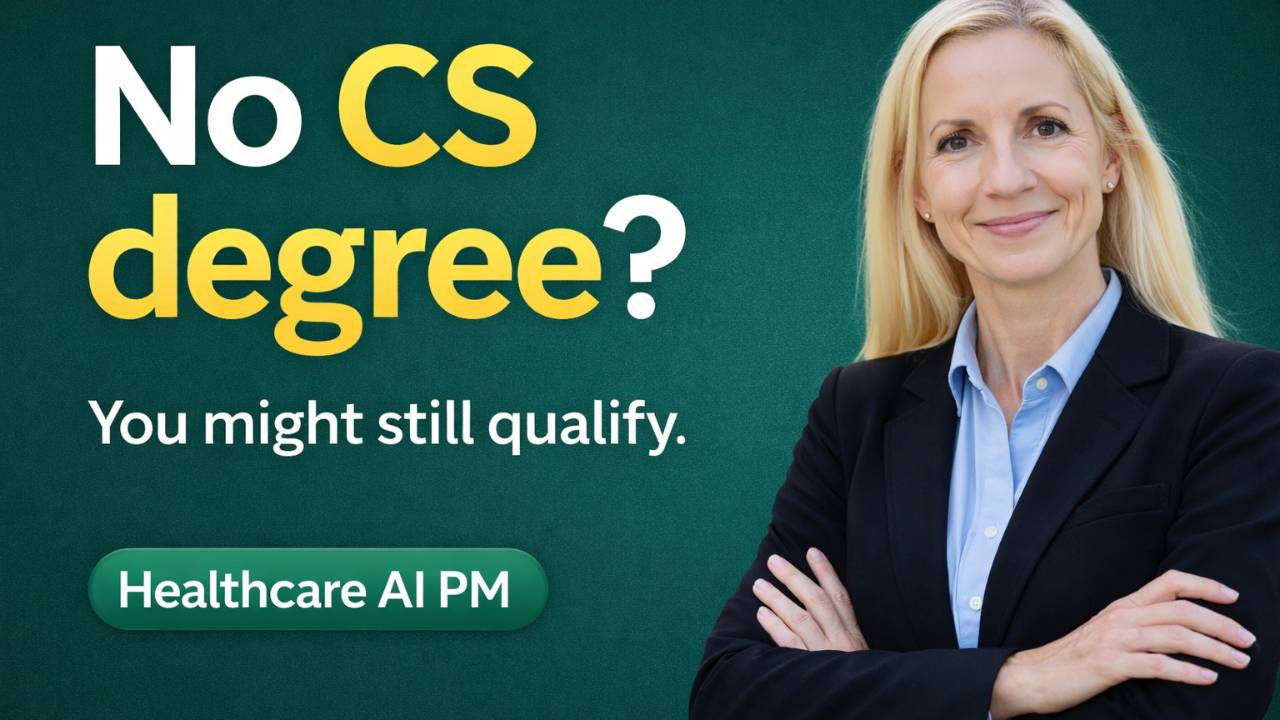
|
The question I get asked more than any other: |
|||
|
"Jennifer — I don't have a tech background. I don't know how to code. I've never worked in software. Can I actually become a healthcare AI product manager?" |
|||
|
My answer is always the same: yes. But not for the reasons most people think. |
|||
|
In my new video, I break down exactly what healthcare AI companies are actually hiring for right now and why the clinicians who understand this are quietly landing PM roles that candidates with CS degrees and MBA credentials are losing. |
|||
|
👉 Watch the full video here — it's 12 minutes and worth every one of them. |
|||
|
|
|||
The myth that's costing clinicians real opportunities |
|||
|
Here's the belief I see holding talented nurses, physicians, and clinical analysts back: |
|||
|
"To work in tech, you need to understand tech at a deep level. If you don't have a CS degree — or at least some coding experience — you don't belong in the room where these decisions get made." |
|||
|
This sounds completely reasonable. It is also wrong — and it's expensive to believe. Wrong because it sends clinicians down rabbit holes of bootcamps and certifications that won't actually move their candidacy forward. And expensive because every month spent preparing to enter a room, you're already qualified to walk into is a month of compounding opportunity cost. |
|||
|
The healthcare AI hiring market in 2026 is not looking for more engineers who learned to care about healthcare. It's looking for people who already understand the clinical environment and can learn to think like a product manager. Those are two completely different candidates. |
|||
|
|
|||
What healthcare AI companies actually hire for |
|||
|
After launching over $300 million in healthcare platforms and sitting in hundreds of product conversations with hiring managers across health systems and Fortune 500 healthcare companies, here's what I can tell you they are actually looking for: |
|||
|
• Clinical domain fluency. The ability to understand what actually happens inside a hospital — the workflows, the pressures, the politics. The moment a sepsis alert fires at 3am and what that means for the nurse who has to act on it. You cannot teach that in a bootcamp. |
|||
|
• Translation ability. Sitting across from a data science team, asking the right questions, and then turning around to explain the tradeoffs to a CMO in language they care about. This is a communication and thinking skill. Not a coding skill. |
|||
|
• Stakeholder management in a complex, high-stakes environment. Healthcare is not like any other industry. The politics, the compliance requirements, the emotional weight — someone who has navigated a clinical environment already knows how to operate under these conditions. |
|||
|
|
|||
|
Notice what's not on that list… |
|||
|
A Computer Science degree, Python, machine learning model training, or deep technical architecture knowledge. Those things live in your engineering team. Your job as a PM is to direct the team not to be the team. |
|||
|
|
|||
3 things you do NOT need (and can stop worrying about) |
|||
|
• You do not need to learn to code. A healthcare AI PM who cannot code but understands clinical workflows deeply will outcompete a PM who can code and has never seen an EHR in a real clinical setting. Every time. The coding lives with your engineers. The clinical judgment lives with you. |
|||
|
• You do not need a CS degree or a data science certification. I've seen nurses land PM roles at major healthcare AI companies competing against candidates with Stanford MBAs and CS backgrounds. They won because they could walk into a product demo with a clinical team and immediately speak the language of the people in that room. That is worth more than a credential in this specific market. |
|||
|
• You do not need to spend $10,000 on a PM bootcamp. General PM bootcamps are not built for healthcare AI. They'll teach you frameworks. They won't teach you how to navigate FDA regulatory review or build a clinical advisory board. And they won't give you the thing that actually gets you hired — a compelling story about why your clinical background makes you the right person for this role. |
|||
|
|
|||
3 things you DO need |
|||
|
Here's where I want to be equally direct — because "you don't need a CS degree" without a clear picture of what you do need is just reassurance, not a plan. |
|||
|
• AI literacy — not AI expertise. You don't need to build models. You need to understand how they work well enough to have productive conversations with the people who do. What is training data bias? What does model drift mean in a clinical context? What are the tradeoffs between sensitivity and specificity when predicting sepsis? These are learnable. This is a 6–8 week investment, not a two-year degree. |
|||
|
• A translated narrative. This is the single biggest gap I work on with the people I coach. Your resume and interview answers are probably still framed in clinical language — which means a PM hiring manager reads your background and sees a great clinician, not a product person. You need them to see a product leader who happens to have clinical depth. That translation is learnable. But it doesn't happen automatically. |
|||
|
• Targeted market knowledge. Know the companies you're targeting, the products they're building, what their customers are complaining about, and where the regulatory and competitive pressure is coming from. This is 30 minutes a day of reading the right things — STAT News, Rock Health, the FDA's AI action plan. Within a few months you'll know more about this market than most of your competition. |
|||
|
|
|||
What actually stops people (it's not what you think) |
|||
|
I've worked with nurses, respiratory therapists, clinical informatics analysts, and health IT project managers who have made this transition without a single line of code on their resume. |
|||
|
What they had in common wasn't a technical background. It was clinical depth, a translated story, and enough market awareness to show up to an interview and immediately demonstrate they understood the problem their future employer was trying to solve. |
|||
|
What I've watched stop people isn't lack of qualification. It's the belief that they're not qualified which leads to endless preparation and zero action. The people who make this transition are not the ones who feel the most ready. They're the ones who got honest about where they were starting and took the next real step. |
|||
|
|
|||
Your next step |
|||
|
Two things I want you to do right now: |
|||
|
1. Watch the video. It's 12 minutes. I walk through all of this in detail — including real transition examples and a breakdown of what the hiring market looks like right now for non-technical clinicians. Watch it here → |
|||
|
|
|||
|
2. Take the free Clinical-to-PM Readiness Scorecard. 12 questions. 3 minutes. It measures the dimensions that actually matter for this transition — clinical depth, product thinking, positioning, market awareness, your network, your timeline — and gives you a personalized result with your most important next move. Take it here → |
|||
|
|
|||
|
If you're a nurse, physician, clinical analyst, or health IT professional who has been telling yourself you're not technical enough — I want you to read this one more time before you close: |
|||
|
The healthcare AI companies hiring right now are not short on engineers. They are short on people who can bridge the gap between what the engineers are building and what actually works at the bedside. That is the role. And that is the gap that your clinical experience uniquely fills. |
|||
|
You may already be more qualified than you know. |
|||
|
|||
|
|
|||
|
Jennifer Rist |
|||
|
Healthcare AI Product Leader | Career Coach for Clinicians Making the Transition to Tech |
|||
|
jenniferrist.com | Healthcare AI PM resources, coaching, and the Clinical-to-PM Readiness Scorecard |


Check out our FREE eBook, Discipline Made Simple: 5 Proven Steps to Transform Your Life in the next 30 Days
Stay connected with news and updates! Join our mailing list to receive the latest news and updates from our team. Don't worry, your information will not be shared. We hate SPAM. We will never sell your information, for any reason.
